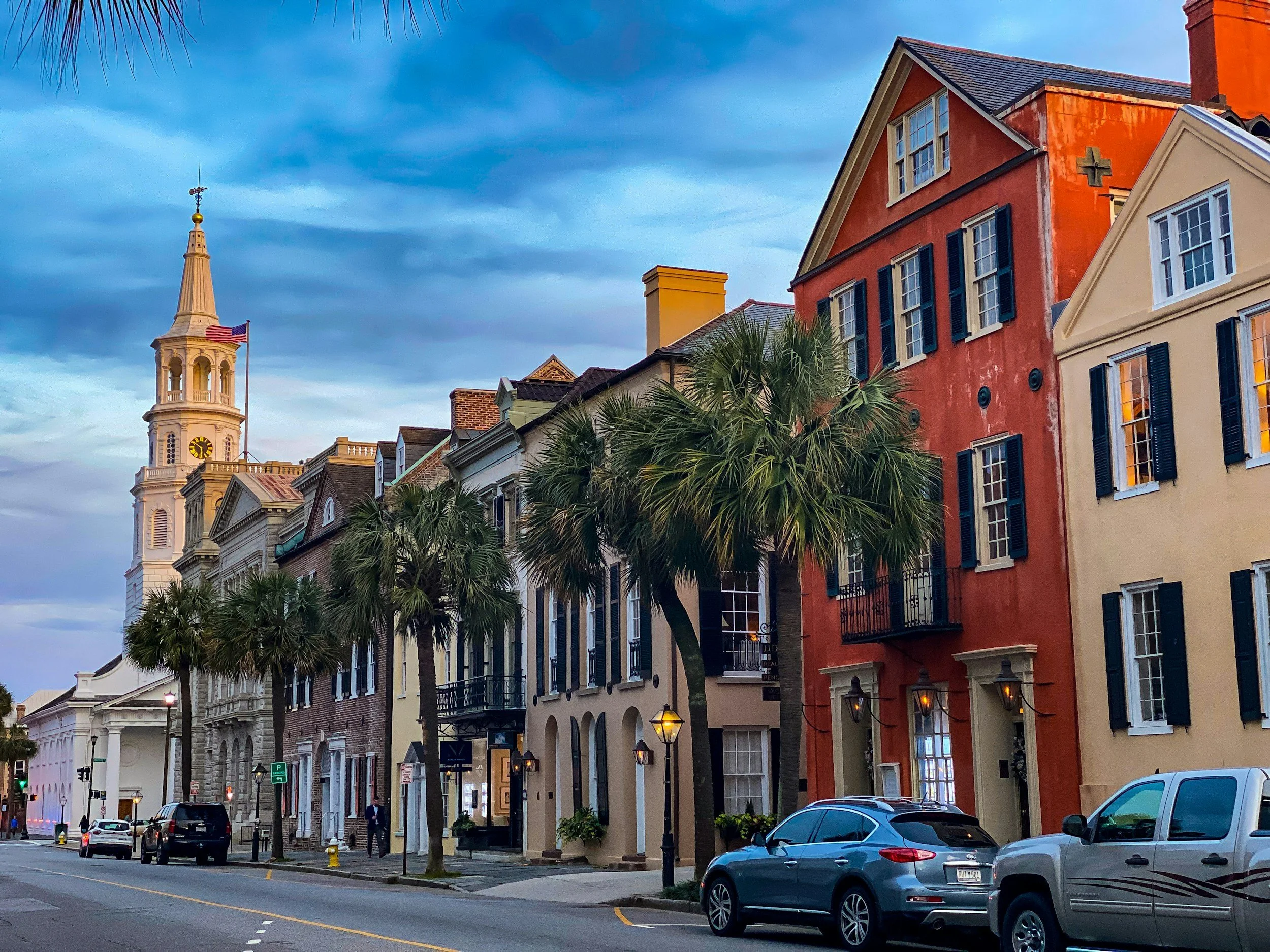
Online Therapy in South Carolina
Teletherapy for Adults in the Palmetto State

About my Work in South Carolina
South Carolina’s landscape ranges from the urban corridors of Columbia and Greenville to the coastal communities of Charleston and Myrtle Beach, and across a wide stretch of rural communities in between. Quality mental health care can be genuinely hard to find across much of the state — limited availability and geographic distance are real barriers. Teletherapy changes that equation. I work with clients throughout South Carolina — Charleston and the Lowcountry, Columbia and the Midlands, Greenville and the Upstate, Myrtle Beach and the Pee Dee.
South Carolina has a thriving university presence — the University of South Carolina, Clemson, Coastal Carolina, College of Charleston, and others bring tens of thousands of students into environments that are academically demanding and often socially intense. ADHD and anxiety are among the most common struggles students face, and they’re frequently underdiagnosed or undertreated, especially for students who made it this far by working harder to compensate. Consistent, individual therapy — not a waitlist, not a six-session cap — makes a real difference.
South Carolina’s deep faith culture means that for many residents, religious identity and personal identity are closely woven together. That can be a genuine source of strength. It can also mean that when faith becomes complicated — through harmful religious experiences, shifting beliefs, or the slow grief of leaving a community that shaped you — finding a safe space to process it isn’t always straightforward. I work with clients who are in the middle of that, and I take it seriously.
I work with the full picture — trauma, addiction, ADHD, anxiety, and depression don’t usually arrive in isolation, and the most effective care addresses what’s actually going on rather than treating each symptom separately. If you’ve worked with providers before who felt like they were only seeing part of what you were dealing with, that’s a common experience — and something I aim to do differently.
Specialties - South Carolina
Trauma & PTSD — including military trauma (Fort Jackson, Joint Base Charleston), adverse childhood experiences, and relational trauma
Addiction & Dual Diagnosis — integrated care for substance use alongside mental health conditions; recovery-informed and non-judgmental
ADHD — specialized adult ADHD care for clients who were never evaluated as children, particularly in areas where access to diagnosis has historically been limited
Anxiety & Depression — including social anxiety, persistent low mood, and generalized worry
Religious Trauma & Faith Deconstruction — shame-informed, unhurried care for adults from South Carolina's faith communities
How Teletherapy Works
Sessions generally last between 45-55 minutes, and are held via secure HIPAA-compliant video — you only need a private space and a phone, tablet, or computer. There's no commute, no waiting room, and no need to be near a major city.
Insurance & Fees — South Carolina
Accepting Private Pay, Spring Health, Aetna, UnitedHealthcare and Cigna clients in South Carolina. Private pay sessions available at $150 per session.
About Me
I'm a Licensed Professional Counselor with 21 years of experience, licensed in Georgia, Florida, South Carolina, Vermont, and New Hampshire, and practicing in Ohio and Minnesota through the Counseling Compact. I'm board certified in telemental health (BC-TMH), certified as an ADHD Clinical Services Provider (ADHD-CCSP), and a Certified Professional Counselor Supervisor in Georgia — which means part of my work is training and overseeing other therapists.
What I care about more than any of that is whether you feel safe enough to be honest, and whether the work is actually useful to you.
I'm trained in a range of approaches — cognitive behavioral therapy, acceptance and commitment therapy, dialectical behavior therapy, motivational interviewing, and EMDR. I think of those as tools rather than a method I run people through. Which ones we use depends on you and what you're working on. Some people want structure and something to practice between sessions. Others need to think out loud with someone who knows what to listen for. Often it's both, at different points.
What stays constant is that we go at your pace, you decide what we work on, and nothing happens because it was next in a sequence.